The Cost of Being First: When the Internet Can't Wait
Speed is cheap. Accuracy compounds. What the Pierre "P" Thomas rumors reveal about the incentive structure of modern media.
BD Records Editorial · August 24, 2026 · 6 min read · Protect the Engine

The recent situation involving Quality Control co-founder Pierre "P" Thomas is a reminder of something bigger than one news story.
Thomas was hospitalized following a medical emergency, and Quality Control had to publicly clarify that he was alive and receiving medical care after false reports of his death began circulating online. The label also asked people to respect Thomas and his family's privacy.
Think about that for a moment.
Someone is fighting for their health. Their family is dealing with a serious situation. And the internet is already moving faster than the facts.
That isn't just a media problem. It's an incentive problem.
⚡ Everyone Wants to Be First
Social media rewards speed.
- Be the first to post.
- Be the first to react.
- Be the first to break the story.
- Get the screenshot, the reposts, the comments, the views.
But when the subject is someone's health, death, family or reputation, being first can become incredibly expensive.
Because what happens when the information is wrong?
You can delete the post. You can't always delete the damage.
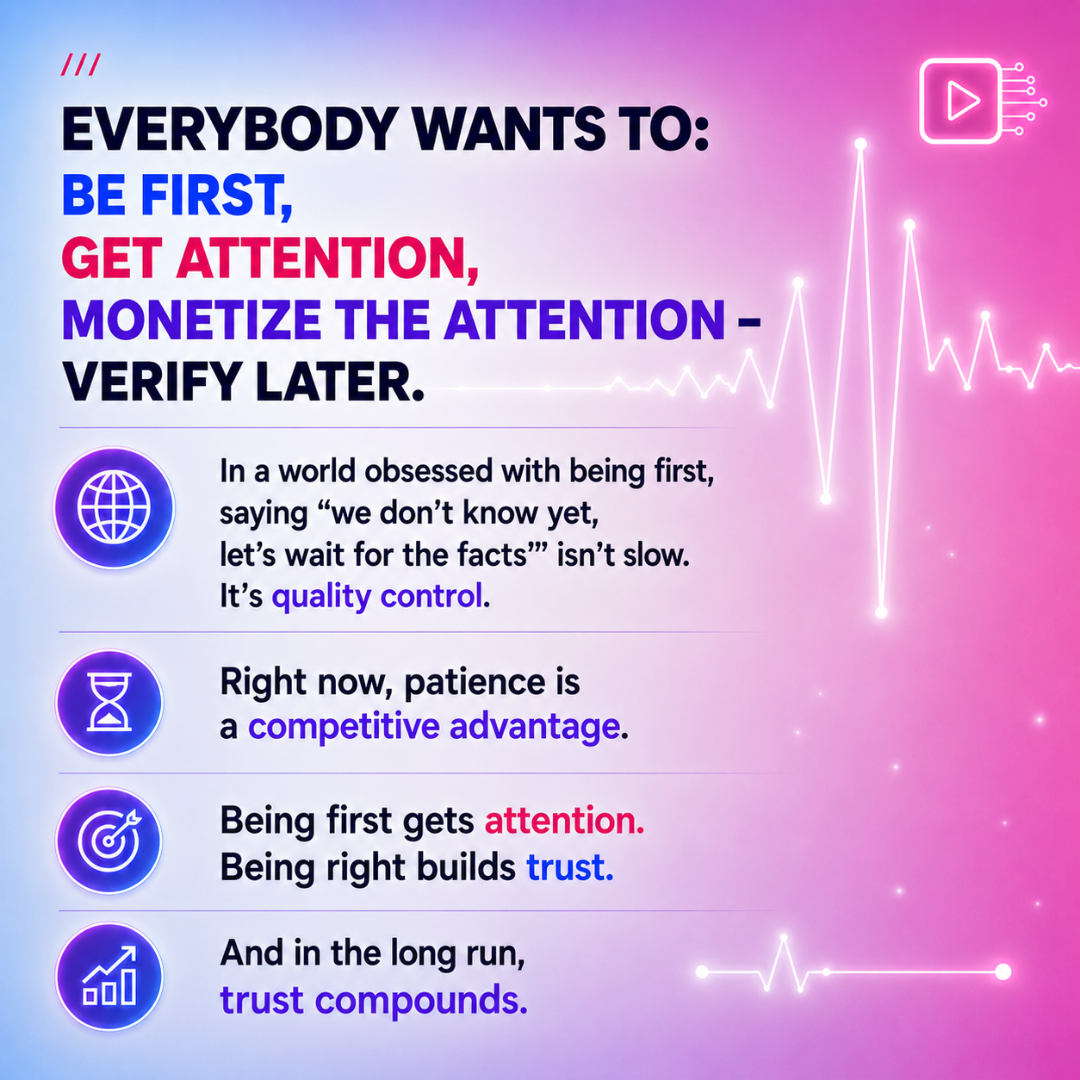
⏳ Patience Is Becoming a Competitive Advantage
In an environment where everyone wants to be first, someone willing to say: "We don't know yet. Let's wait for the family." isn't behind.
They're practicing quality control.
Being first gets attention. Being right builds trust. And in the long cycle, trust compounds.
🌐 This Goes Beyond Journalism
The same pattern shows up everywhere.
- An artist posts something, and people immediately assume what it means.
- A celebrity is hospitalized, and people start writing tributes.
- A rumor starts, and thousands of people repeat it.
- A relationship ends, and the internet writes the story.
- A legal allegation appears, and the allegation becomes the identity before the facts have even developed.
The technology isn't necessarily the problem. The incentive structure is.
💸 The Click Can Become the Product
At some point, the story itself becomes secondary.
The click becomes the product. The reaction becomes the product. The outrage becomes the product. And emotional speed becomes a competitive advantage.
But that creates a dangerous trade: more attention today in exchange for less trust tomorrow.
That's short-cycle thinking.
📈 Quality Control Is a Business Skill
This isn't just about ethics. It's business.
A publication that consistently gets things wrong loses credibility. A creator who constantly reacts loses judgment. A brand that chases every controversy becomes associated with controversy. And an artist who reacts emotionally to every provocation can eventually damage the very brand they're trying to protect.
The long-cycle operator asks a different question: "What happens if this information is wrong?"
That question can save a reputation. Sometimes it can save a career.
🧠 The New Flex
In a culture built around instant reactions, restraint can look boring.
But restraint is becoming rare. And rare things can become valuable.
The ability to pause. Verify. Think. Wait. Then speak.
That's not weakness. That's discipline. That's editorial judgment. That's quality control.
The internet will always reward speed. BD Records doesn't have to.
We can choose accuracy over urgency. Context over reaction. Trust over clicks.
Because the goal isn't to win the next five minutes. It's to still be trusted five years from now.
BD Records presents: Protect the Engine.
Music. Culture. Business. And the long cycle.